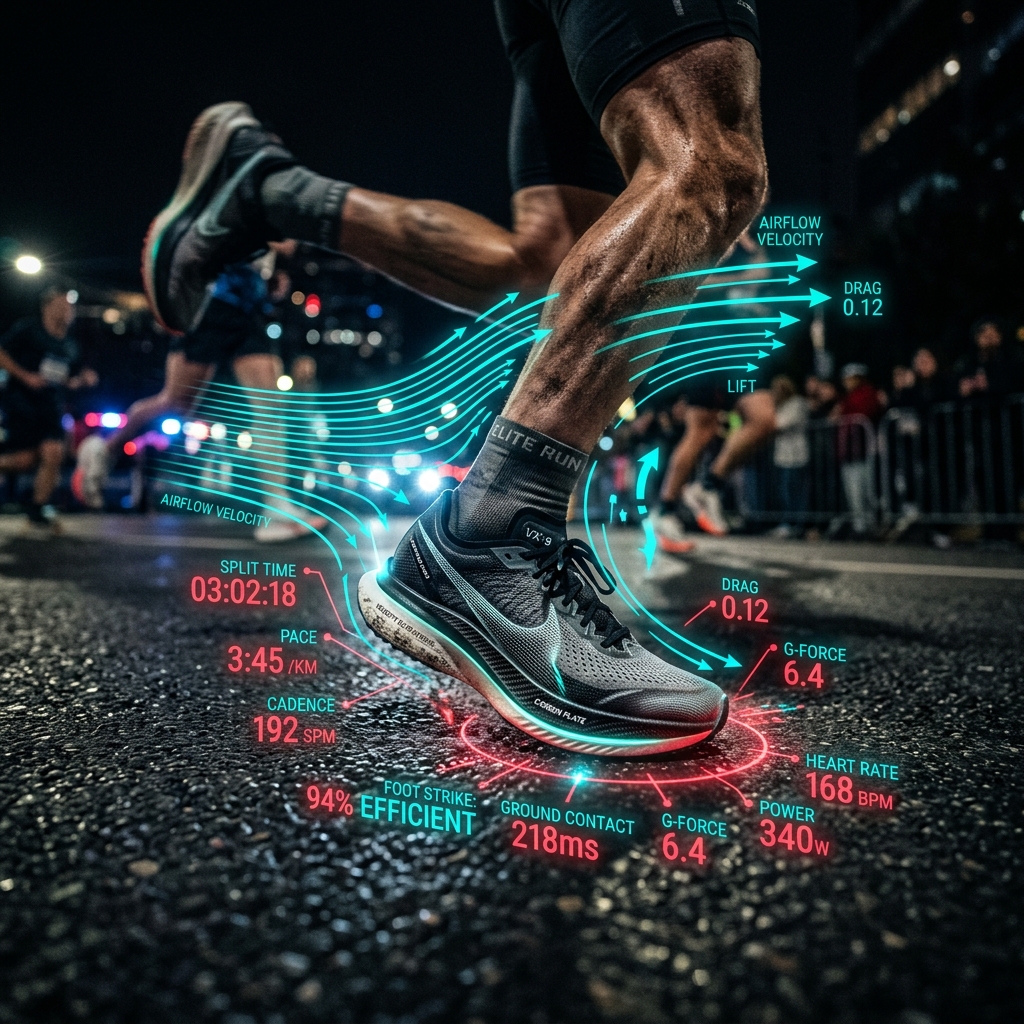
October 12, 2019, Vienna, Austria. At 7:15 AM, on a meticulously prepared circuit in the Prater park, Eliud Kipchoge crosses the finish line in 1 hour, 59 minutes and 40.2 seconds. The world had been holding its breath for years for this moment. The two-hour barrier  that psychological, physiological, and symbolic wall that humanity deemed untouchable  had just crumbled beneath his stride. But behind this titanic feat of an exceptional man hid an army of engineers, data scientists, and artificial intelligence algorithms that had patiently, for years, calculated every variable to make the impossible mandatory.
Monza, October 2019  The Day the Impossible Became Reality
First, let's rewind to 2017, when Nike launched Breaking2 in Monza, on the legendary Formula 1 racing circuit. The idea at the time was as bold as it seemed crazy: gather three of the best marathoners on the planet  Eliud Kipchoge, Lelisa Desisa, and Zersenay Tadese  and propel them under the symbolic two-hour mark. The Monza attempt narrowly failed, with Kipchoge finishing in 2h00'25'', just 25 seconds away from the Holy Grail. But this result was not a defeat: it was an invaluable collection of data for the Nike Sport Research Lab teams.
Two years later, in Vienna, everything had changed. The Prater circuit, a 4.3-kilometer loop, was selected by Nike's algorithms after a comparative analysis of dozens of European routes. The selection criteria  near-zero elevation gain, ideal asphalt surface, orientation relative to prevailing winds  were all modeled and weighted by machine learning systems. Even the weather was studied over ten years of historical data to identify the October window as the most favorable in terms of temperature, humidity, and atmospheric pressure. Absolutely nothing was left to chance.
"No human being runs alone. Behind Kipchoge in Vienna, there were thousands of hours of algorithmic calculation, biometric sensors, predictive models. AI didn't run the marathon  but it made it possible."
Nike Breaking2: The Secret Project of a Corporation and an AI

Behind the closed doors of the Nike Sport Research Lab (NSRL) in Beaverton, Oregon, a team of more than 40 researchers  biomechanists, physiologists, materials engineers, data scientists  had gathered around a single goal. Their central tool? A predictive modeling system powered by machine learning capable of simultaneously analyzing hundreds of physiological, biomechanical, and environmental variables.
The AI model developed by Nike ingested data from sensors attached to Kipchoge's body during each training session: real-time heart rate, step cadence, stride length, vertical oscillation, ground contact time, foot strike angle, blood lactate, VO2 max under variable conditions. This data, collected over years, allowed the system to identify technical micro-adjustments likely to improve running economy  that is, the amount of energy consumed per kilometer run at a given speed.
What distinguished the Breaking2 project from any previous attempt was precisely this ability to treat human performance as a multi-variable optimization problem with multiple constraints. The AI wasn't just trying to make Kipchoge faster on a given day  it sought to identify the optimal configuration of the entire system: athlete + equipment + conditions + logistics + nutrition. A problem that the human brain, as brilliant as it is, was structurally incapable of comprehending in all its complexity.
Algorithmic Shoes: Carbon X and the Carbon Fiber Plate
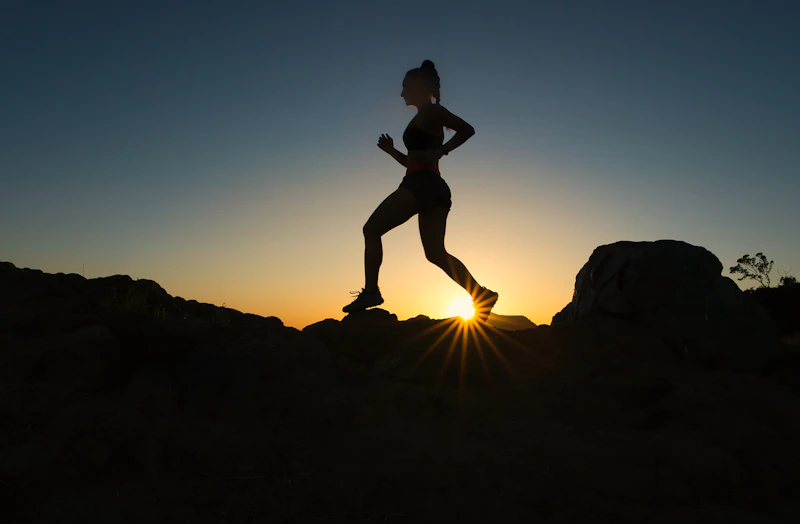
If a single technological artifact had to embody the algorithmic revolution of the marathon, it would be the Nike Vaporfly NEXT%, worn by Kipchoge in Vienna. But behind its sleek silhouette and loud colors lies a design story entirely governed by artificial intelligence. To design this shoe, Nike engineers used computational fluid dynamics (CFD) simulations and finite element models to simultaneously optimize the sole's geometry, the stiffness of the carbon plate, and the visco-elastic properties of the ZoomX foam.
The carbon plate integrated into the sole is not an innovation born of creative chance: it is the result of algorithmic iterations on hundreds of virtual prototypes tested in simulation. The plate acts like an elastic bow that stores energy during the landing phase and releases it during propulsion  a mechanism biologists call the tendino-muscular effect of the Achilles tendon. Algorithms determined the optimal angle of curvature, ideal thickness, and exact modulus of elasticity to maximize this energy return: officially a 4% improvement in economy compared to traditional competition shoes.
Independent studies published in the British Journal of Sports Medicine confirmed and even exceeded these figures, measuring running economy gains of up to 7 to 8% for certain biomechanical profiles. The AI had predicted, specifically for Kipchoge, a stride profile particularly compatible with the sole geometry. This personalization wasn't marketing  it was pure calculation.
Drone-Pacemakers and the Laser Car
One of the lesser-known dimensions of the Ineos 1:59 Challenge project  the official name of the Vienna attempt  is the logistical sophistication of the 41 pacemakers deployed on the circuit. These elite athletes, recruited from the best middle-distance runners and marathoners in the world, were not randomly arranged around Kipchoge. Their positioning, speed, and rotations  each pacemaker changed every 5 to 7 minutes  were calculated by an aerodynamic optimization algorithm developed in collaboration with the fluid mechanics department at Ghent University.
The V-formation adopted by the pacemakers replicated the principle of aerodynamic drag reduction used by cyclists in a peloton. Numerical simulations determined that Kipchoge, positioned exactly 2.5 meters behind the front pacemakers in the diamond formation, benefited from an aerodynamic resistance reduction of nearly 80% compared to running solo under the same weather conditions. A speed advantage equivalent to about 40 seconds over the total distance.
But the most spectacular innovation was invisible to the naked eye from the stands: an algorithmically-driven Tesla Model X preceded the formation at a constant speed, projecting a green laser beam onto the road to indicate in real time the exact spot Kipchoge had to place his foot at each moment to maintain the required pace of 2 min 50 sec/km. This system, coupled with a centimeter-precision GPS clock, eliminated human error in tempo  a variable that AI models had demonstrated could compromise metabolic balance over the total race duration if it varied by more than ±3 seconds per kilometer.
"The green laser on the asphalt was the physical materialization of an algorithm  the boundary between what is humanly possible and what the machine makes mandatory. Kipchoge just had to follow the light."
Nutrition and Hydration Meticulously Planned by Machine Learning
To discuss the Vienna performance without mentioning the nutritional dimension would be to omit one of the project's algorithmic pillars. The question of what to eat, when, how much, and in what form during a sub-two-hour marathon attempt is of dizzying biochemical complexity. The human body has about 90 minutes of available muscle glycogen at the required pace  meaning that halfway through, Kipchoge was already in a potential energy deficit zone.
To solve this equation, project nutritionists used machine learning models trained on years of Kipchoge's physiological data  blood glucose levels, gastric emptying rate, intestinal carbohydrate absorption based on effort intensity, insulin response to different concentrations of energy solutions. These models helped define a nutritional protocol personalized to the minute: Kipchoge consumed a maltodextrin and fructose-based energy capsule exactly every 20 minutes, in a concentration calculated to maximize absorption without risking the infamous gastrointestinal distress that ends so many elite performances.
Hydration followed an identical logic. Non-invasive skin sensors  derived from medical technology  measured sweat rate and electrolyte concentration in real-time. This data, transmitted to a computing unit aboard the lead car, adjusted the composition of the drinks served to Kipchoge every 15 minutes. The sodium, potassium, magnesium, and carbohydrate concentration of each sip was different  and algorithmically determined based on hydration status measured 2 minutes prior. A level of nutritional personalization that no human coach, no matter how brilliant, could have conceived or executed in real-time.
During the 18 months leading up to Vienna, Kipchoge had also followed a training regimen entirely overhauled by algorithms. Every session  long runs, intervals, active recovery  was prescribed by an AI system integrating biometric recovery data (heart rate variability, sleep quality via a smartwatch, salivary cortisol) to optimize training load and prevent overtraining. The result: Kipchoge arrived at the Vienna starting line in a state of fitness that his own biometric data classified as the absolute peak of his career.
Conclusion: Kipchoge and the Future of Augmented Athletics
The Era of the Algorithm-Augmented Athlete
October 12, 2019, was not just the day an extraordinary man ran faster than anyone before him. It was the day artificial intelligence conclusively demonstrated it had become an inseparable partner to elite human performance. Kipchoge was the pilot of a total system  athlete, data, algorithms, equipment, logistics  in which no single component could have produced the result without the others.
What this heralds for the future of athletics is both fascinating and dizzying. The next generations of distance athletes will be trained from an early age with digital twins  algorithmic replicas of their physiology capable of simulating years of training in just hours of computation. World Athletics is already debating the regulation of technological equipment, seeking to define where legitimate aid ends and mechanical doping begins. An increasingly blurred, increasingly philosophical boundary.
But beyond regulatory controversies, the profound truth of what happened in Vienna's Prater deserves to be celebrated: for the first time in sports history, human intelligence augmented by machine pushed the boundaries of what the human body can achieve. And if Kipchoge is right  if no human is limited  then algorithms may simply be the tool humanity was waiting for to prove it.


